Kitora
Choosing and planning
What should you do after a first aid kit gets wet?
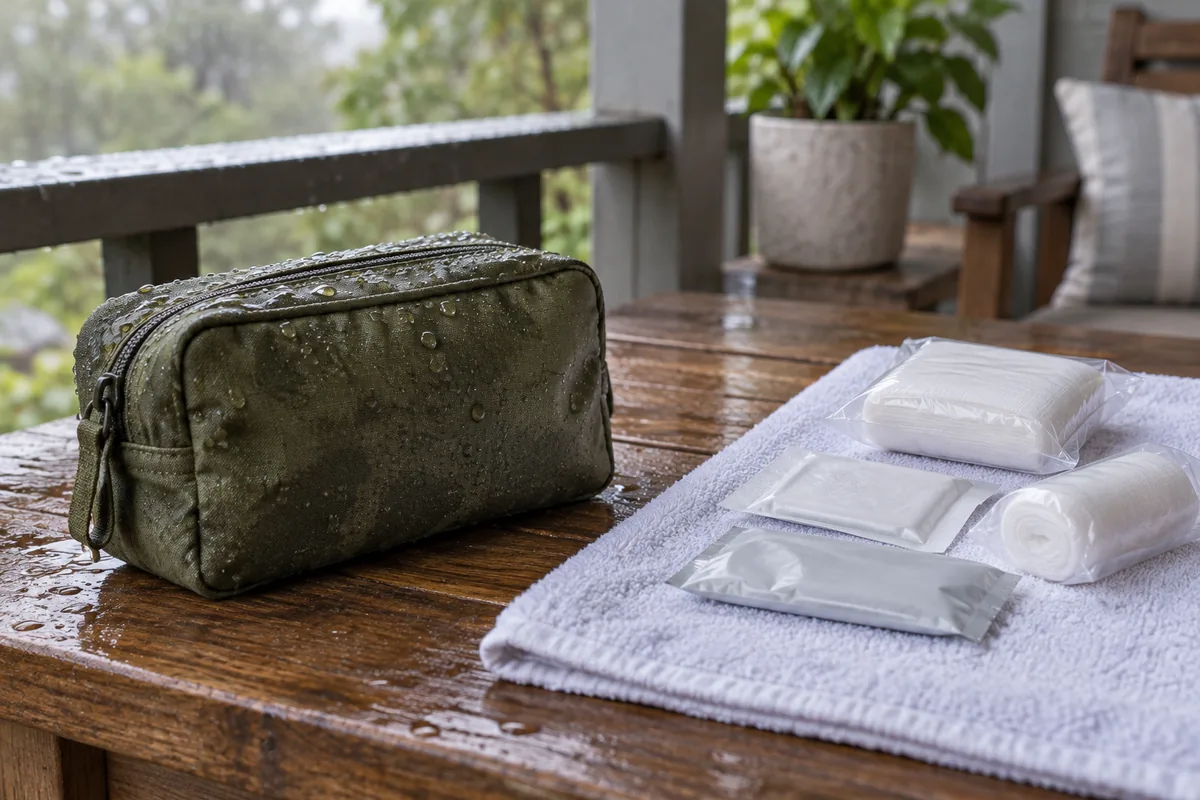
Set a wet kit aside and inspect the case and each supply. Replace items if sterile packaging was wet or damaged, and do not use medicines exposed to floodwater or mud.
The Kitora blog
Practical help with choosing supplies, storing kits and keeping them ready to use.
Choosing and planning
Set a wet kit aside and inspect the case and each supply. Replace items if sterile packaging was wet or damaged, and do not use medicines exposed to floodwater or mud.
Choosing and planning
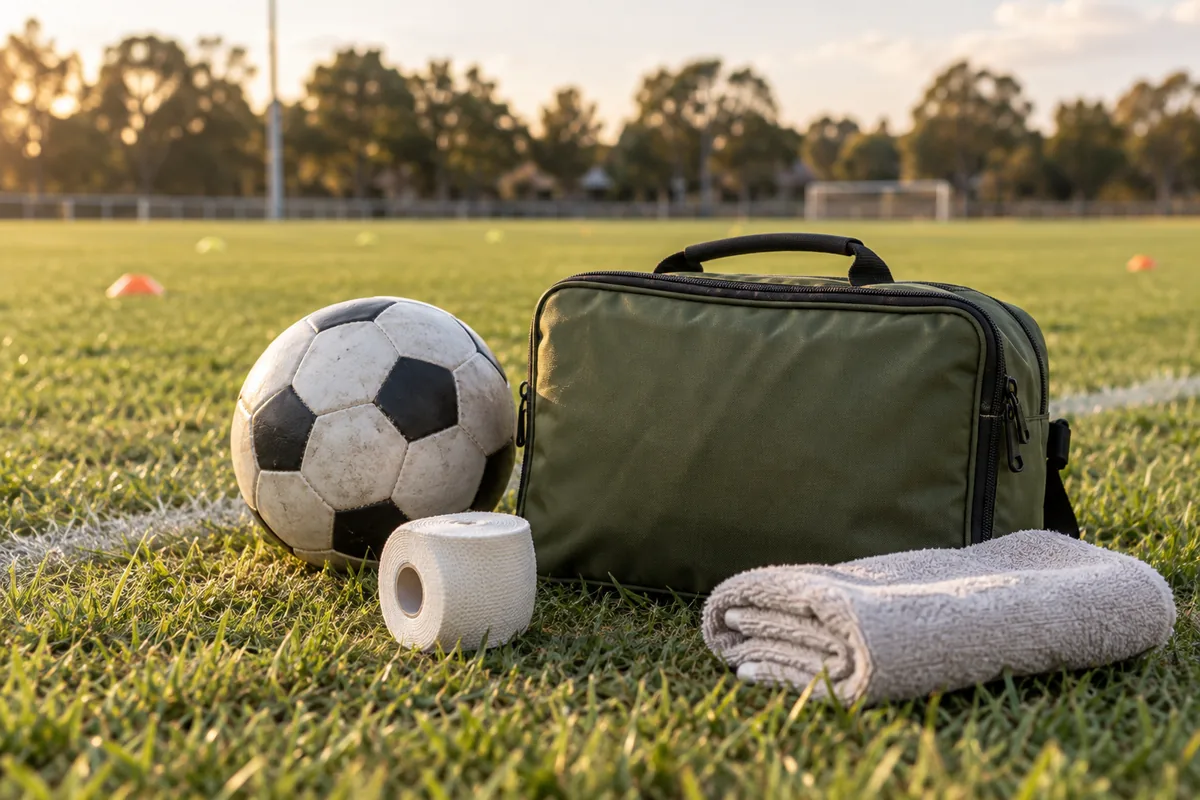
Shape the kit and event plan around the sport, venue, group size and access to help. Confirm who will carry it and how participant-specific plans will be followed.
Choosing and planning
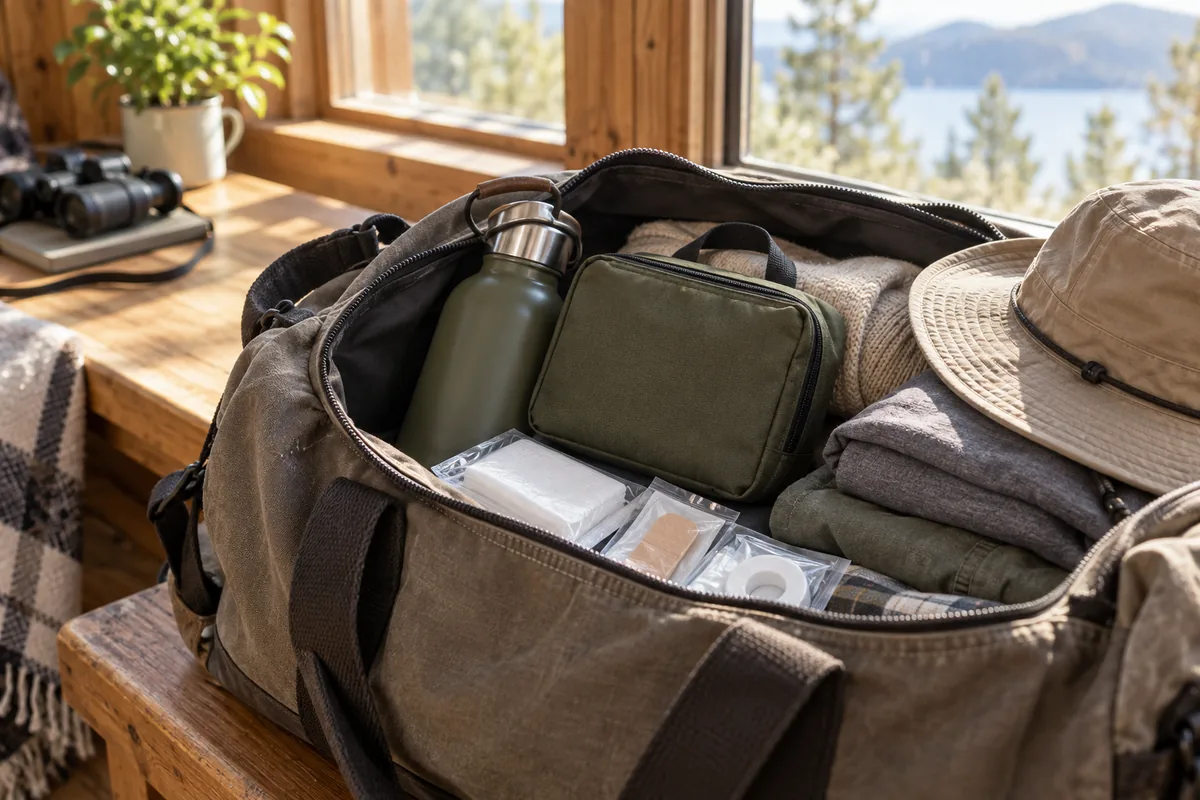
A separate pouch can help when your home kit will stay behind or you will be far from shops or medical help. Choose supplies around the trip and travellers’ needs.
Choosing and planning
Match refills to the kit’s contents list. Check the item, quantity, packaging, expiry date and storage instructions before restocking.
Choosing and planning
If you’re starting from scratch, a ready-made kit is often cheaper and easier. Compare the contents with what you need, then add extras or build a more specific kit.
Workplace kits
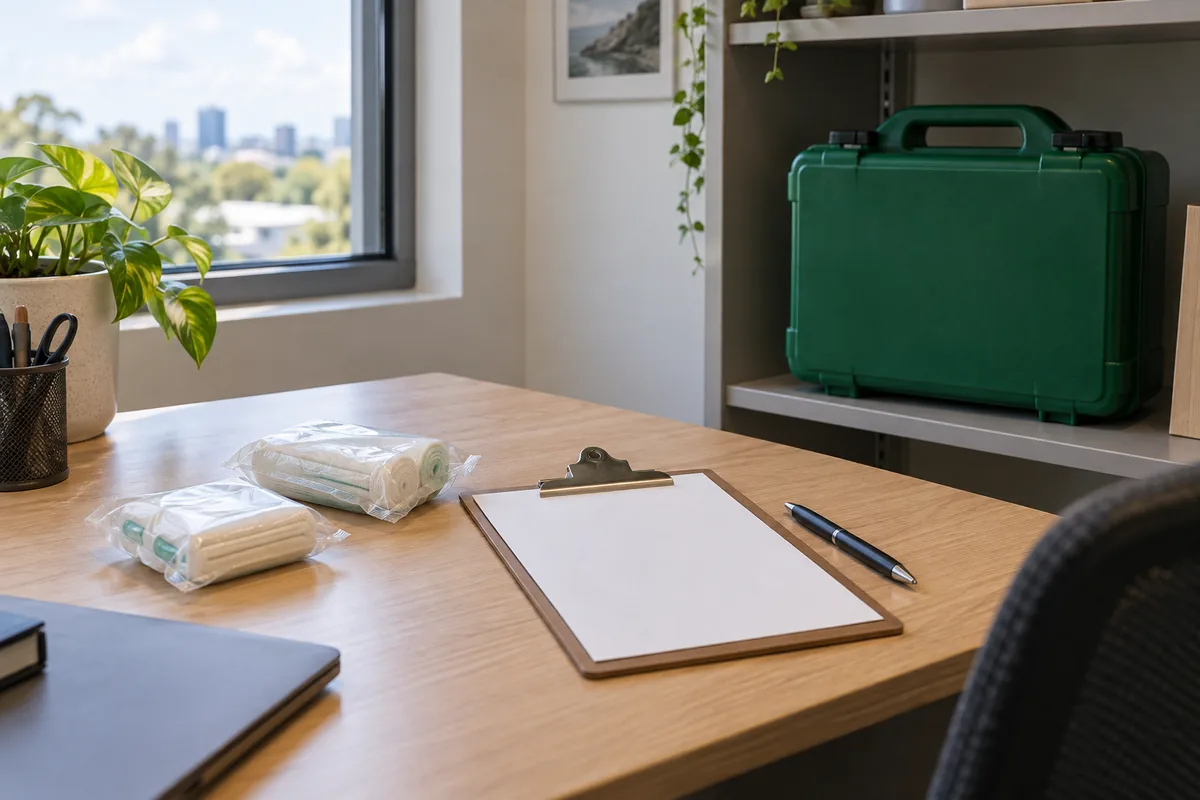
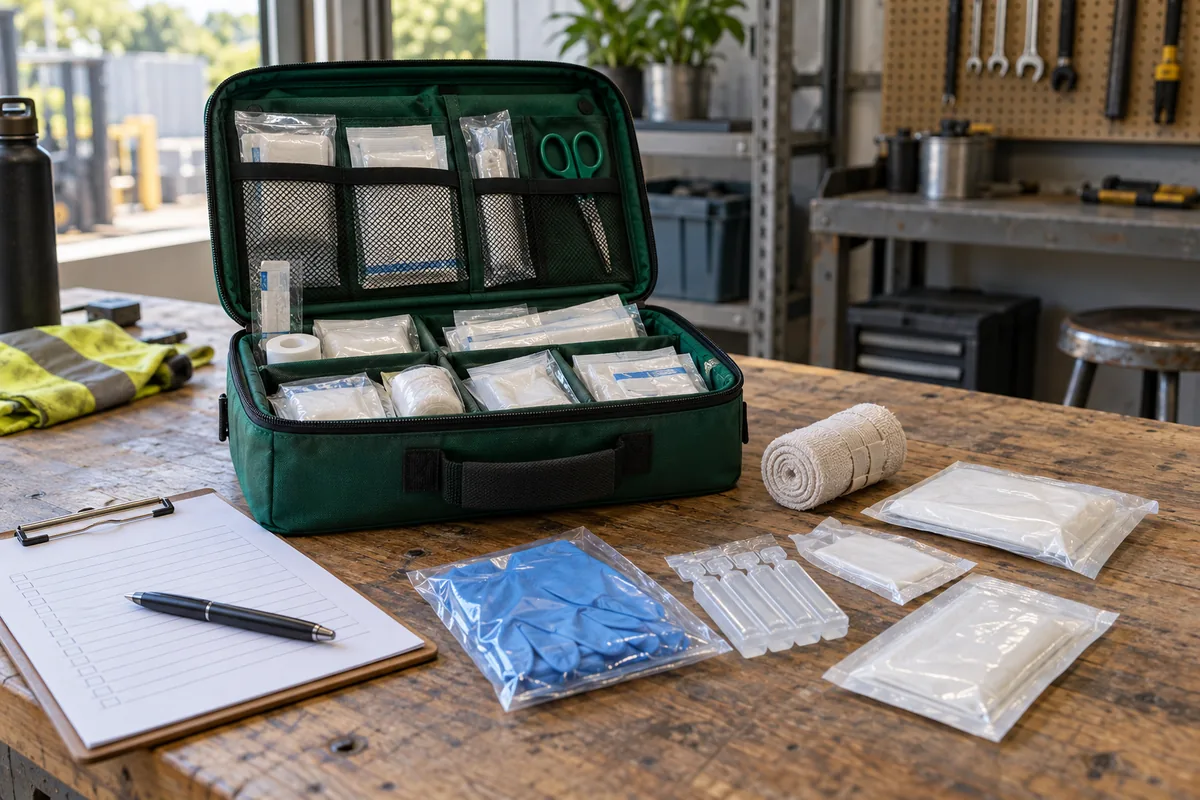
Name a maintainer and backup for each kit. Keep checks, restocking and shift handovers clear.
Workplace kits
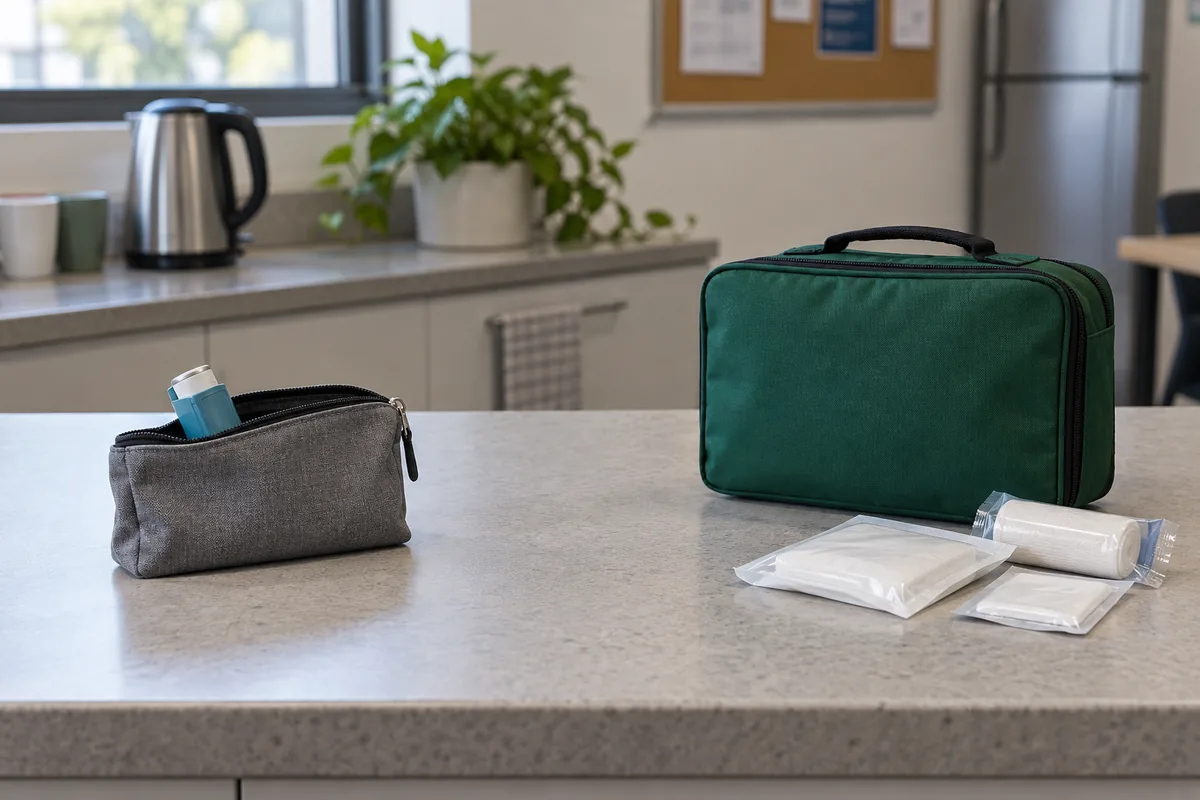
Keep routine painkillers out of shared kits, while planning separately for emergency asthma and allergy supplies.
Workplace kits
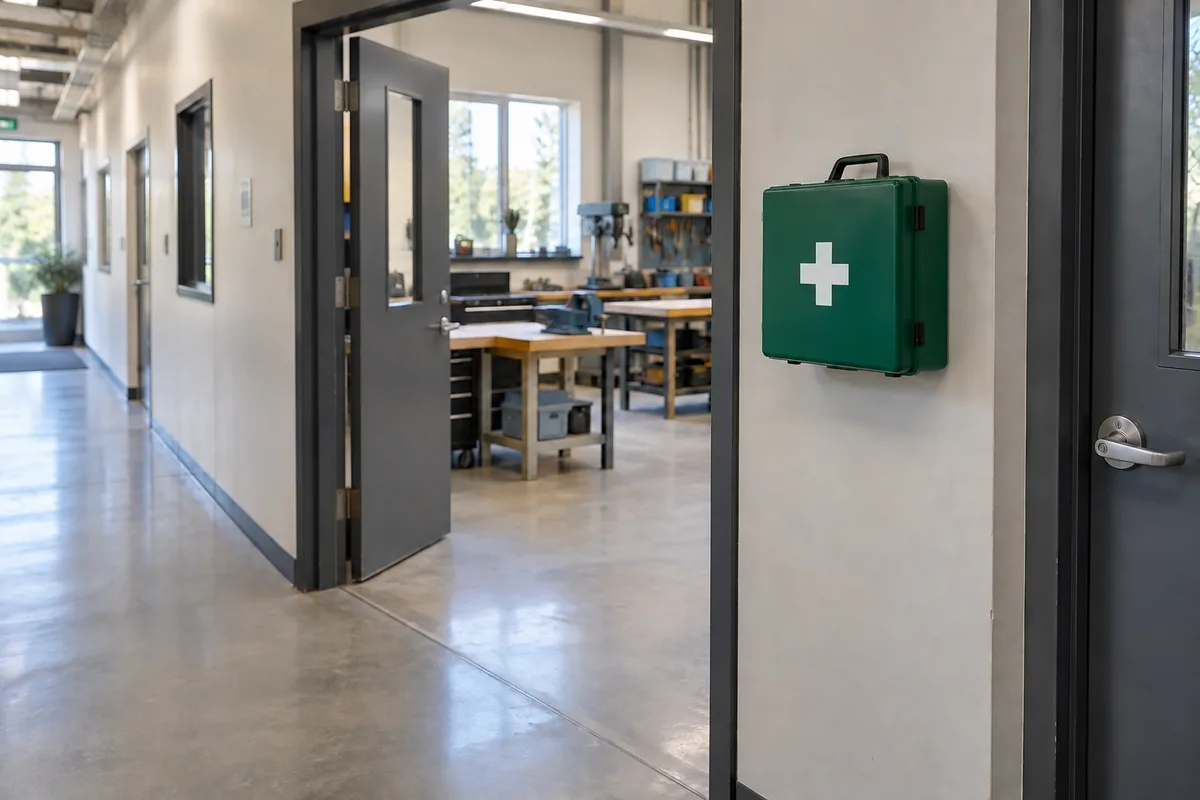
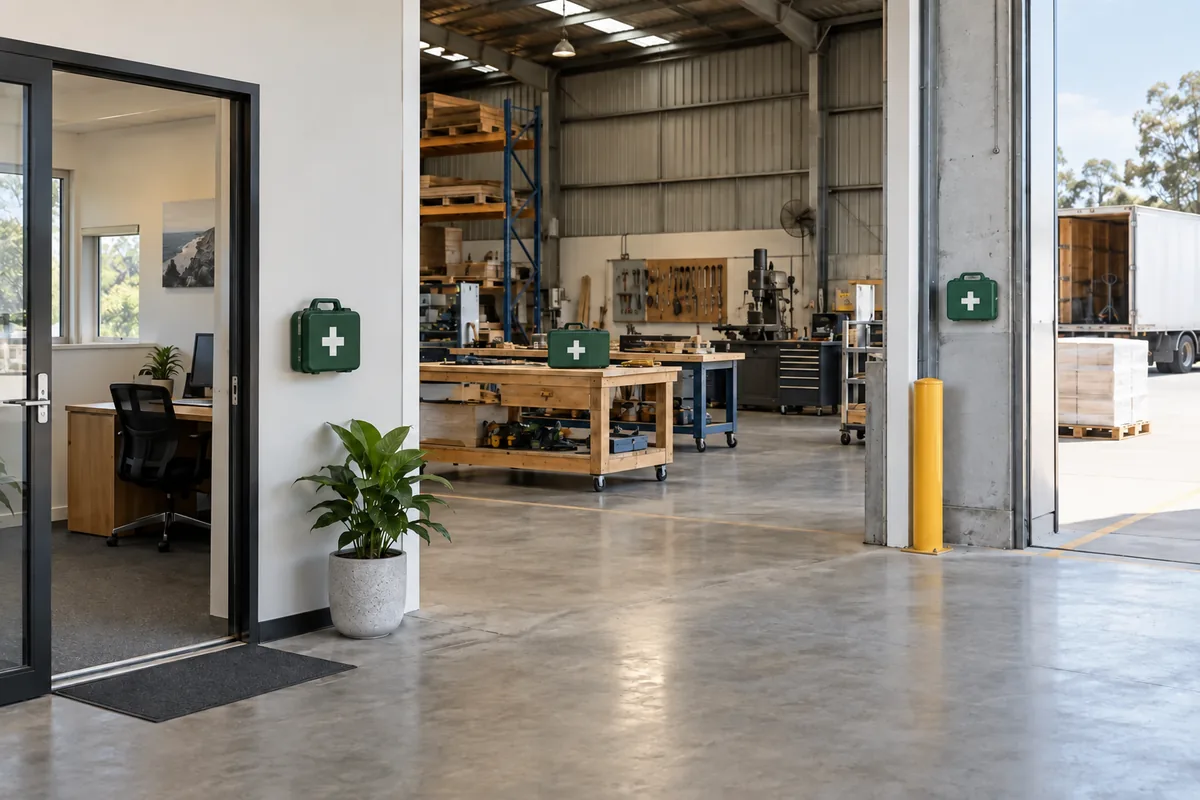
Place kits where every shift can reach them, close to higher-risk work and easy to find on site plans.
Workplace kits
Provide at least one kit, then add coverage for separated areas, shifts and mobile work. Victoria has its own counting approach.
Workplace kits
Use Safe Work Australia’s Appendix E example and quantities as a starting point, then tailor kit contents and modules to workplace hazards.
Stock and supplies
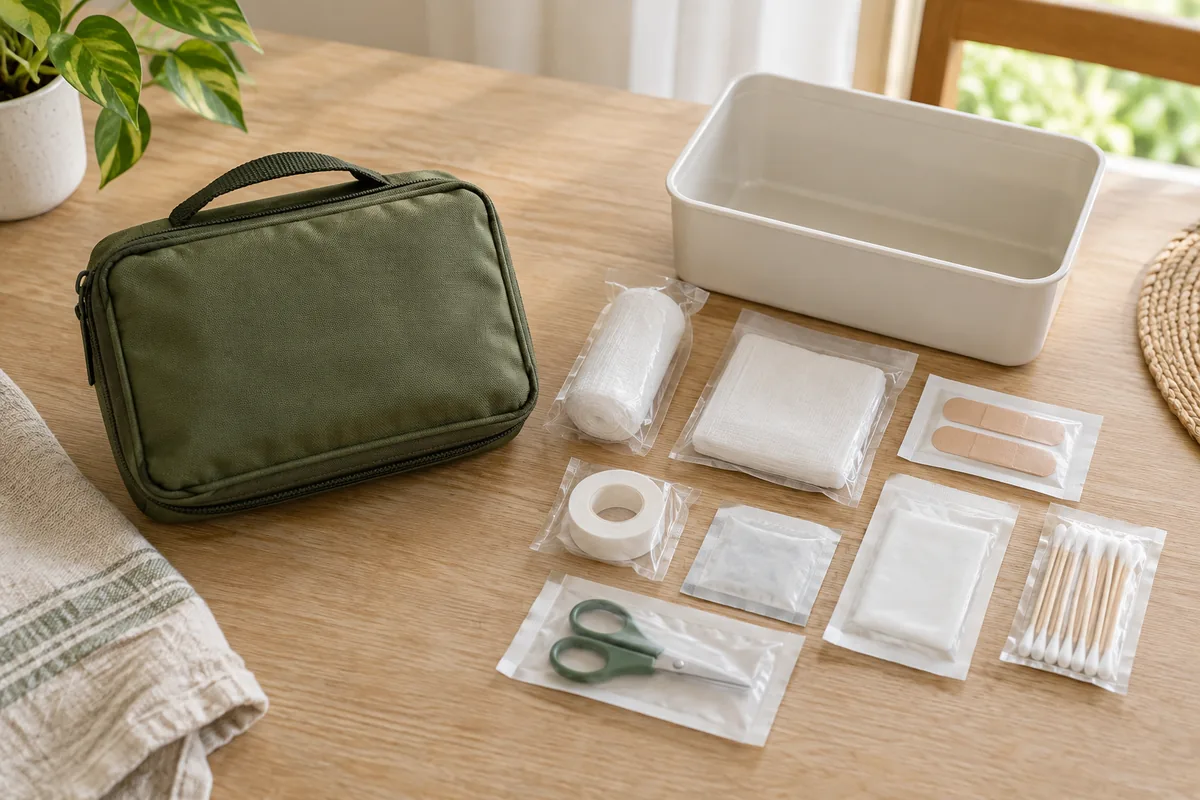
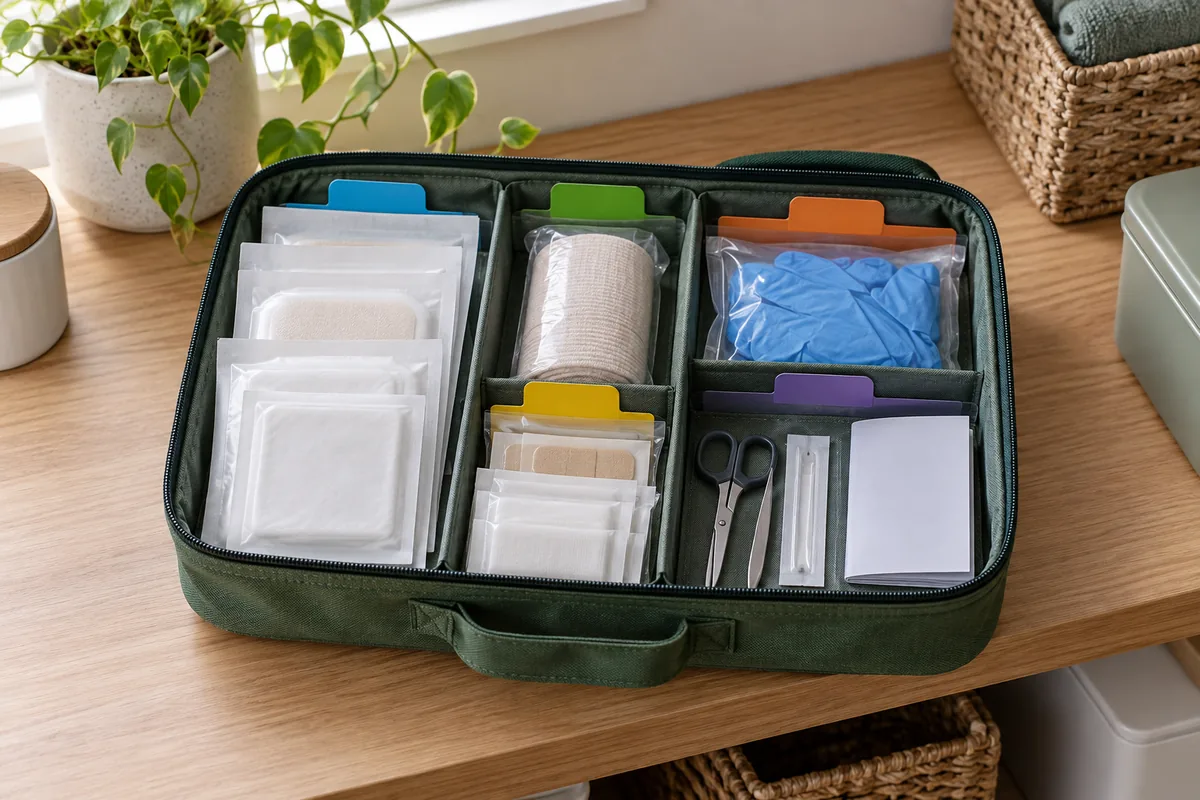
Group supplies by use, keep sterile items sealed and put the kit somewhere adults can find quickly. A simple contents list helps you spot what needs replacing.
Stock and supplies
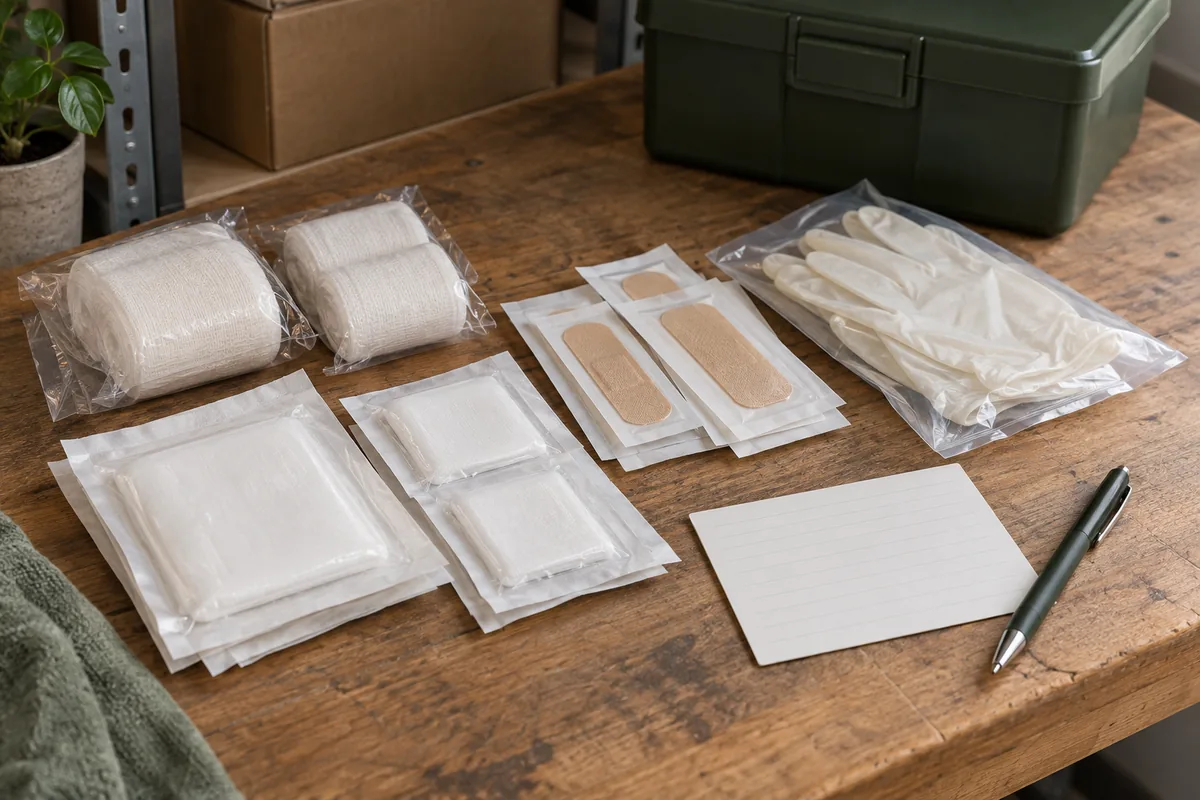
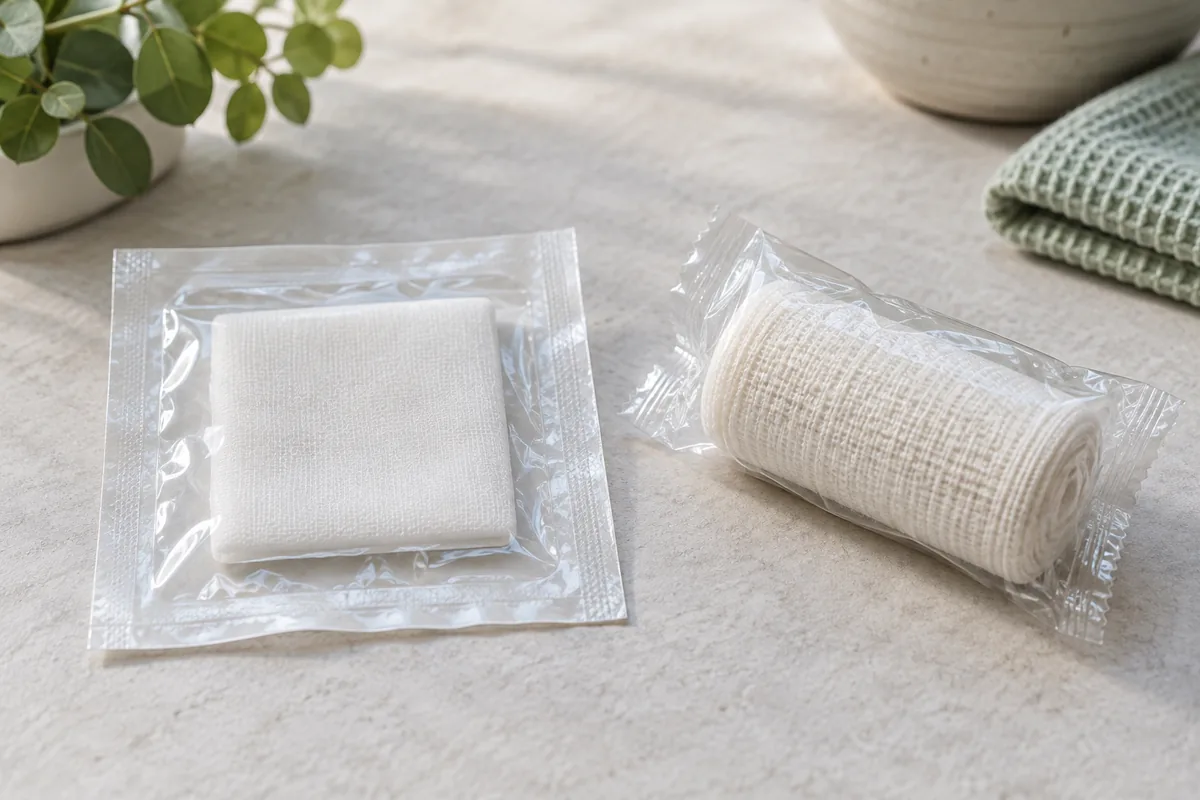
A dressing covers a wound, while a bandage can secure the dressing or support an injured area. Some bandages can also be used as a pad or sling.