Kitora
Free checklist · Australia
Workplace first aid kit checklist
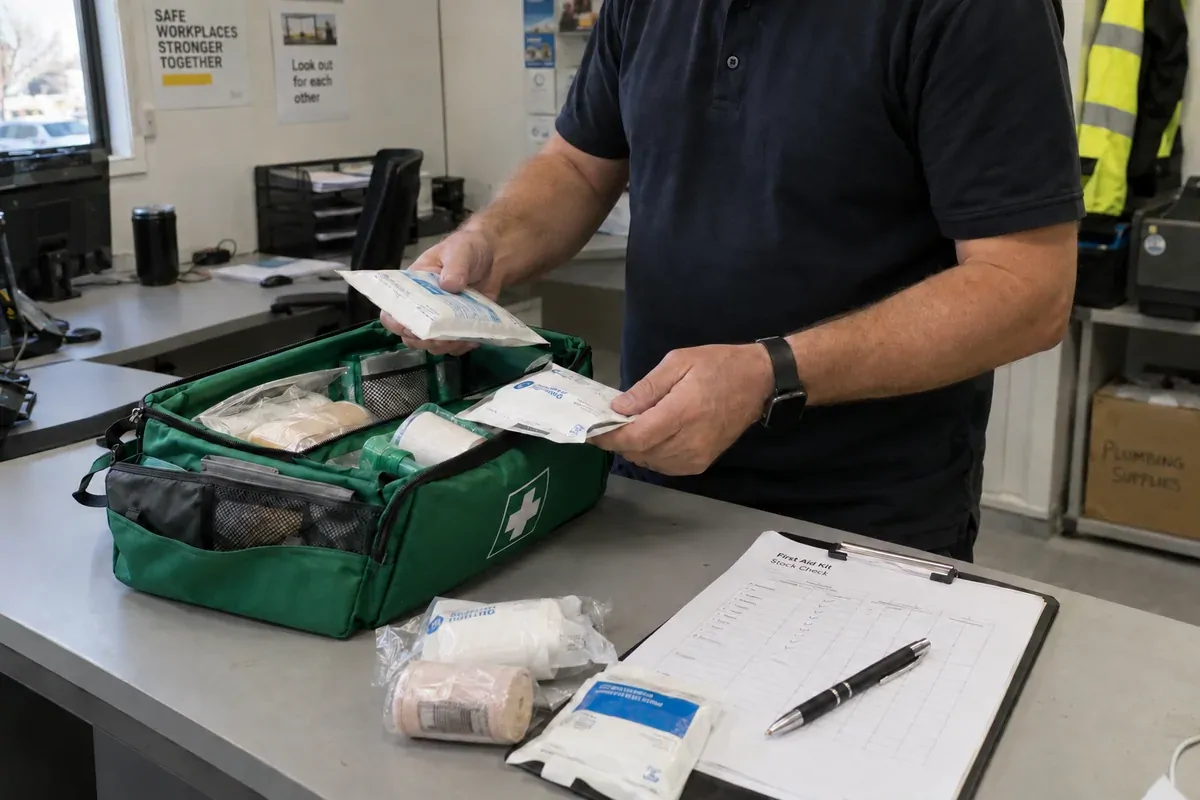
Compare the supplies in your kit with your workplace’s contents list. Record missing, expired or damaged items and what needs replacing.
Use this when you need to…
- check a kit after use or on its regular review date
- hand a clear restocking job to another person
- show what was checked, by whom and when
Before you start
Start with the risks at your workplace, not someone else’s list. Then use the sheet below to turn the physical check into a documented follow-up.
What a useful record looks like
Example: recording a shortage
Name the item, record the shortage and say who will replace it. Mark the work complete after the supplies are back in the kit.
REQUIRED HERE5 pairs
ON HAND2 pairs
STATUSRestock
OWNER / DUECasey · 18 Aug
FOLLOW-UPOrder 3 pairs; return them to Kit 02; mark this row closed.
ON SCREEN OR PAPER
Workplace first aid kit check
Choose a printer or “Save as PDF” in the print dialog.
This is a customisable form for workplace WHS needs; adapt its items and quantities to your workplace. Check the requirements and approved guidance that apply in your state or territory.
How to use this sheet: Set the quantity your workplace requires, then count usable stock only. Exclude expired, damaged or opened sterile items. Record condition, expiry and follow-up action. Use whole quantities in the stated unit; 1 packet of 50 strips means one complete packet.
| Item | Code example quantity | Required here | Usable | Inspection | Restock / action |
|---|---|---|---|---|---|
| Instructions for providing first aid, including a CPR flow chart | 1 | [ ] | |||
| Notebook and pen | 1 | [ ] | |||
| Resuscitation face mask or face shield | 1 | [ ] | |||
| Disposable nitrile examination gloves | 5 pairs | [ ] | |||
| Sterile gauze pieces, 7.5 × 7.5 cm, 3 per pack | 5 packs | [ ] | |||
| Saline, 15 ml | 8 | [ ] | |||
| Single wound-cleaning wipe, 1% Cetrimide BP | 10 | [ ] | |||
| Adhesive dressing strips, plastic or fabric, packet of 50 | 1 | [ ] | |||
| Single-use disposable splinter probes | 10 | [ ] | |||
| Tweezers or forceps | 1 | [ ] | |||
| Antiseptic liquid or spray, 50 ml | 1 | [ ] | |||
| Non-adherent wound dressing/pad, 5 × 5 cm (small) | 6 | [ ] | |||
| Non-adherent wound dressing/pad, 7.5 × 10 cm (medium) | 3 | [ ] | |||
| Non-adherent wound dressing/pad, 10 × 10 cm (large) | 1 | [ ] | |||
| Conforming cotton bandage, 5 cm wide | 3 | [ ] | |||
| Conforming cotton bandage, 7.5 cm wide | 3 | [ ] | |||
| Crepe bandage, 10 cm, for serious bleeding and pressure | 1 | [ ] | |||
| Scissors | 1 | [ ] | |||
| Non-stretch hypoallergenic adhesive tape, 2.5 cm roll | 1 | [ ] | |||
| Safety pins, packet of 6 | 1 | [ ] | |||
| BPC wound dressing No. 14, medium | 1 | [ ] | |||
| BPC wound dressing No. 15, large | 1 | [ ] | |||
| Combine Pad dressing, 9 × 20 cm | 1 | [ ] | |||
| Clip-seal plastic bags | 1 | [ ] | |||
| Triangular bandage, calico or cotton, minimum width 90 cm | 2 | [ ] | |||
| Emergency rescue blanket for shock or hypothermia | 1 | [ ] | |||
| Single-use eye pads | 4 | [ ] | |||
| Hydrogel, 3.5 g sachets (if clean running water is unavailable for 20 minutes) | 5 sachets if water unavailable | [ ] | |||
| Instant ice pack | 1 | [ ] |
Problems found and action taken:
________________________________________________________________________________
________________________________________________________________________________
Overall result: [ ] Ready [ ] Restocking needed [ ] Escalate
Checker signature: ____________________ Date: ____________________
Match the kit to the work.
Review your workplace hazards, size, location and the people who may need first aid. Add items identified for outdoor or remote work, burns, chemicals, children, allergies or other hazards. For hazardous chemicals, check the current safety data sheets for first aid needs.
Office or studio
Check access, location visibility, expiry, used supplies and the responsible person.
Community workshop
Check the location, shared ownership, hazards, open actions and handover between volunteers.
Remote or outdoor work
Consider distance, environment, communications and any extra equipment identified by risk assessment.
Checklist questions
What should be in a workplace first aid kit?
Safe Work Australia’s Code lists general contents and quantities for most workplaces. Use the table above as a starting point, then add or adjust items to suit your workplace hazards.
How often should a workplace first aid kit be checked?
Check it after each use. If it has not been used, the model Code describes checking it at least every 12 months. A workplace may choose a shorter interval when use, risk or replacement times make that sensible. See the full check-frequency guide.
Source checked 22 September 2026: These 29 base items and quantities match Appendix E (pages 30–31) of Safe Work Australia’s First aid in the workplace Code of Practice (2019). Appendix E also describes outdoor, remote and burn modules on page 32; add relevant items as custom rows after reviewing workplace hazards. Check applicable requirements with your state or territory regulator.
NEXT STEP
Save the check and list any work needed.
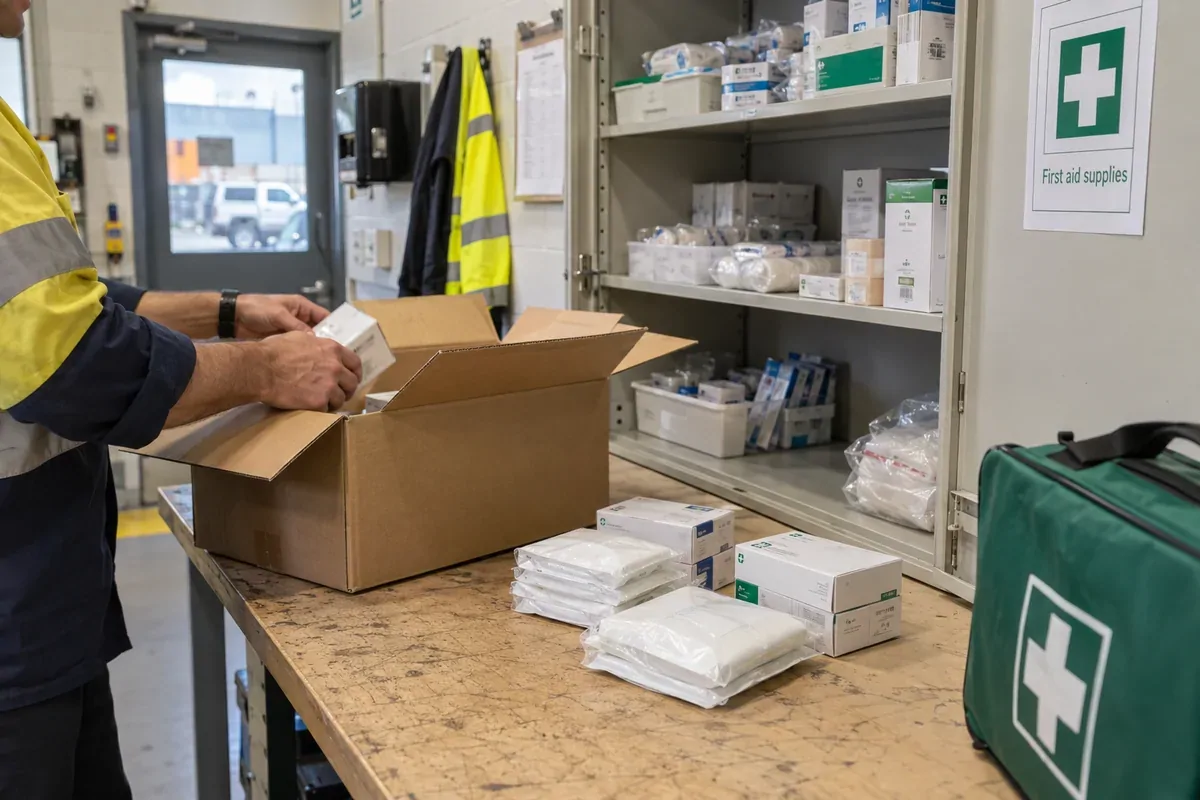
Use the inspection record to assign and close follow-up, or the restocking handover to get missing items back into the kit. Kitora keeps repeated checks, shortages and history together offline.
Using Kitora
Check stock and record the result.