Kitora
What belongs in a car first aid kit?
Choose familiar first aid supplies, secure the case in the vehicle and plan separately for medicines that are sensitive to heat.
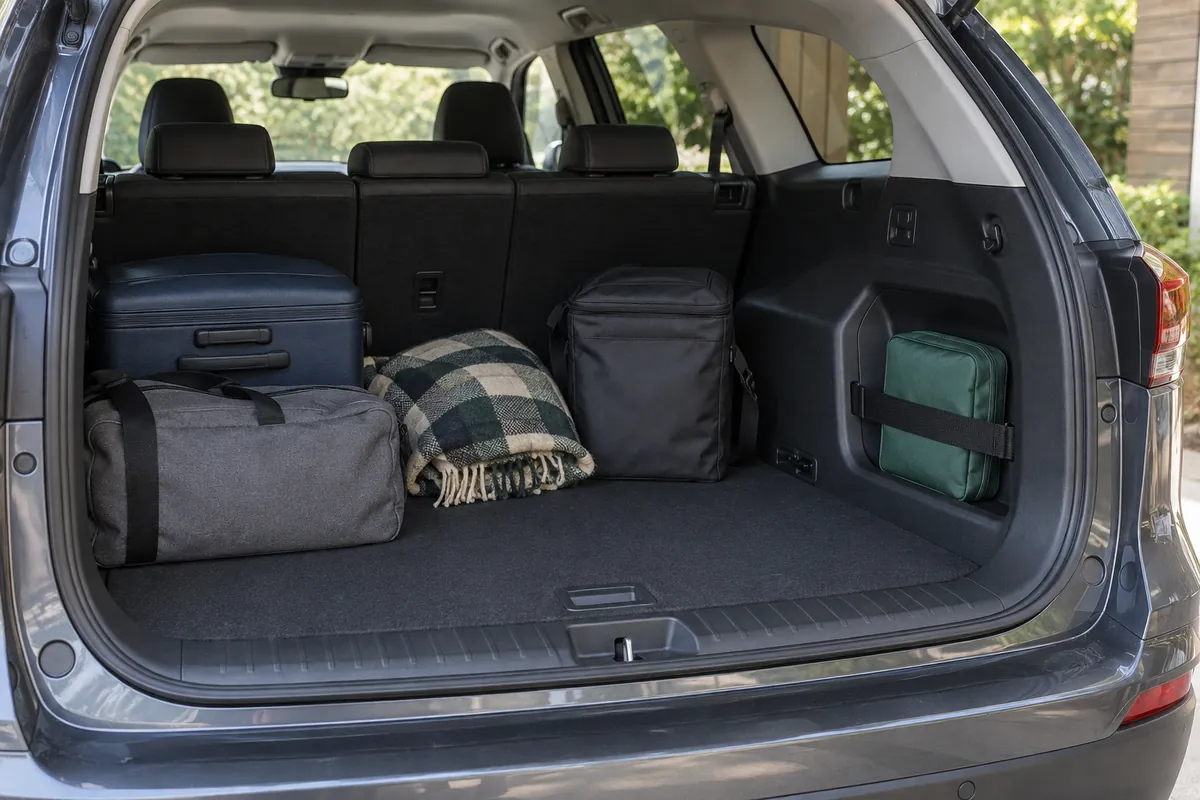
Keep dressings, bandages, gloves and basic first aid tools in a sturdy case, and secure it so it cannot become a projectile. Choose supplies your passengers can recognise and use.
What to carry
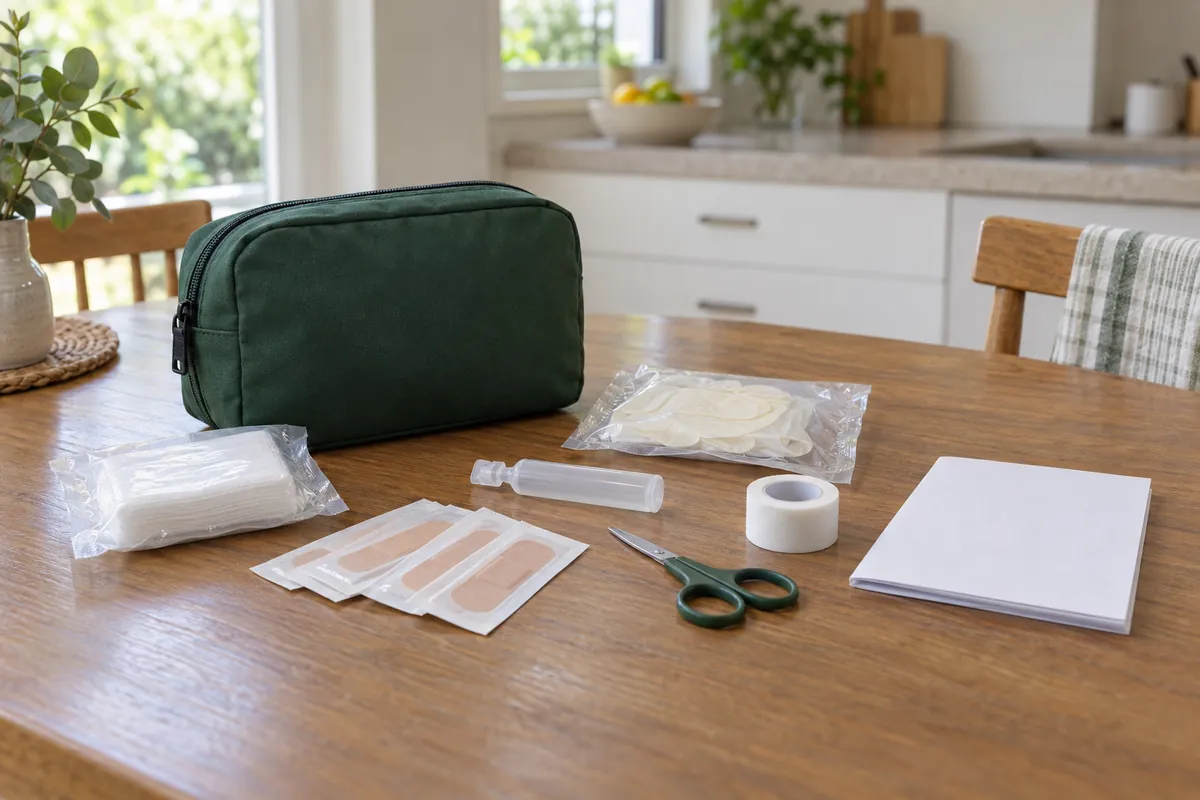
A practical core can include adhesive strips, sterile pads, gauze, roller and triangular bandages, tape, gloves, saline, eye pads, scissors, tweezers and a first aid booklet. Adjust the contents for regular passengers and longer trips; see the basic contents and vehicle extras for more options.
Burns sheets, burn gel and a biohazard bag are possible extras for a vehicle kit. If you pack burn gel, cool the burn with running water for at least 20 minutes before using it; use commercial gel only after that or when cool water is unavailable.
Secure the case
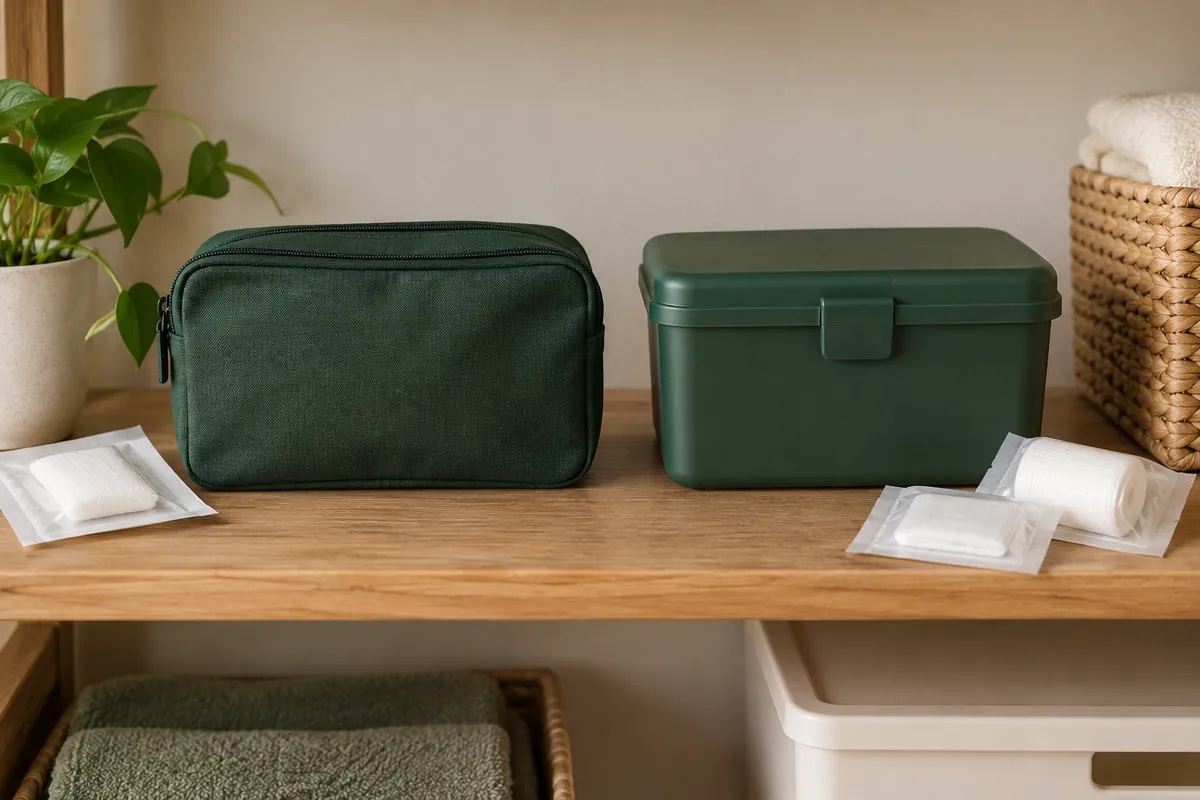
Store it somewhere dry and easy to find. A fitted compartment or suitable strap may work, depending on the vehicle. Check that an adult can reach and open it when the car is parked without unpacking the boot. For help choosing a case that fits your vehicle, see the bag-or-box guide.
Keep medicines out of a hot car
Don’t leave medicines in a hot car. Follow the storage instructions on each medicine’s label and keep any emergency medicine within reach of the person who needs it. For a prescribed adrenaline device, follow the device storage instructions.
Check after use
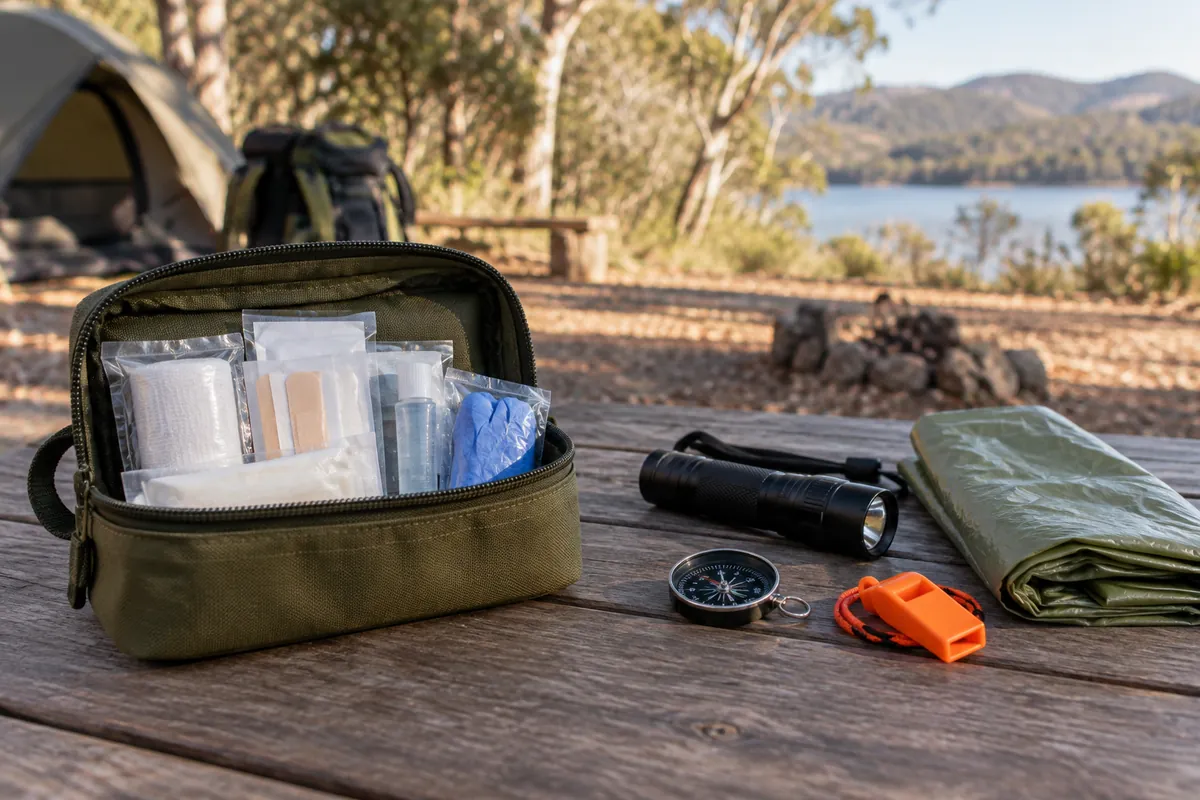
Replace anything used and check after each use or at least once every 12 months for expiry, damage and sterile packs that are no longer sealed, following the recommended kit checks. For supplies that stay at home, see the home kit guide. For longer outdoor trips, read how to plan a camping kit.