Kitora
Was the kit used?
Yes: check it, replace used items and record the action now.
Free schedule guide · Australia
After use, check the kit straight away. If it has not been used, the national model guidance describes checking it at least every 12 months. Your risks or local requirements may set a shorter rhythm.
In Victoria, the compliance code recommends quarterly checks and checks after every first aid event. See the source comparison below.
THE PRACTICAL ANSWER
Plan the next check for every kit, but add a check whenever the kit is used or the work changes. Start with the model baseline, then document why your workplace has chosen anything shorter.
Decision guide
Yes: check it, replace used items and record the action now.
Yes: review the kit after a move, new hazard, staffing or shift change.
Use the model at-least-annual baseline, unless local rules or risk set a shorter schedule.
Shorter intervals can be sensible when supplies are used often, hazards are serious, workers are remote or mobile, or replacement takes time. Monthly, quarterly and six-monthly schedules are workplace choices unless guidance applying to your jurisdiction says otherwise.
EDITABLE SCHEDULE · NO SIGN-UP
Choose an interval from your workplace procedure, after checking the guidance below. This calculator adds dates; it does not choose a compliant frequency. Add up to 20 kits, edit any field, then print or save as PDF.
Entries stay in this page only. They are not sent or saved by this tool and will be lost when you reload or leave. Print a copy before closing. Do not enter treatment details.
Months use the same day where possible, otherwise the last day of the destination month: 31 January + 1 month becomes 28 February (29 in a leap year). Weeks mean seven days. Dates start from the last completed check, with no weekend or public holiday adjustment.
Always check after use. Replace used items as soon as practicable. A future date does not mean a kit is complete or ready. An earlier action date does not automatically reset the routine schedule.
| Source | What it says | What to do with it |
|---|---|---|
| National model Code | Check after use or, if unused, at least every 12 months. | Use it as a model baseline, then check whether and how it applies locally. |
| SafeWork NSW guidance | Workplace procedures should state responsibility and check frequency. | Name an owner and put the chosen routine in the workplace procedure. |
| WorkSafe Victoria code | Paragraph 142 says kits should be checked quarterly and after every event requiring first aid. | Use the Victorian code when setting your procedure. Its guidance is not mandatory, but following it can satisfy the duties it covers. |
Read the model Code, SafeWork NSW guidance or WorkSafe Victoria’s compliance code as relevant, then use the regulator directory for other jurisdictions.
Sources checked 9 September 2026. The model Code is dated July 2019 (section 3.1, page 13); Victoria’s code is dated November 2021 (paragraph 142, page 29). For ACT, NT, Queensland, South Australia, Tasmania, Western Australia or Commonwealth workplaces, use the regulator directory to confirm the applicable code, including industry-specific requirements. A supplier’s service interval is not itself a legal rule.
Confirm the kit is where it should be, visible and accessible.
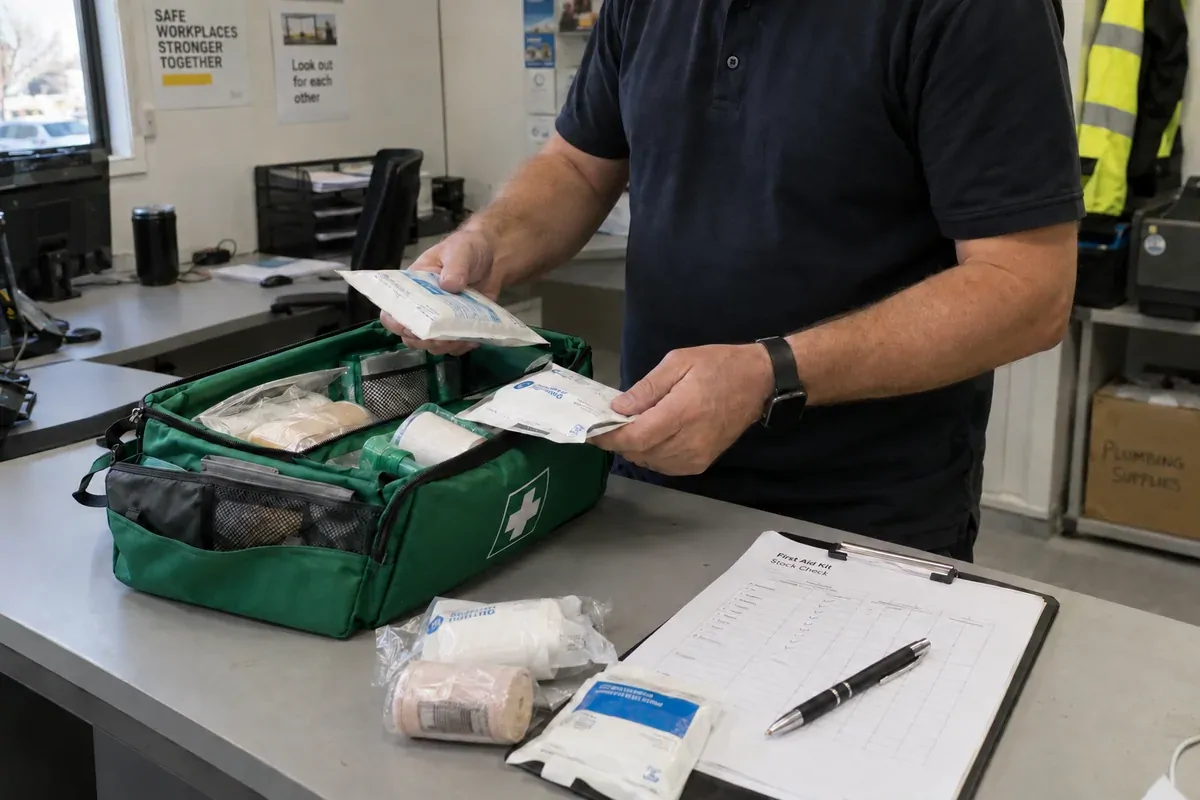
Check contents, expiry, seals, condition and workplace-specific items.
Assign shortages, record action and set the next date.
Use the workplace first aid kit checklist for item-level checks and the inspection record to document actions and closure.
No. The model Code describes checking after use or, if unused, at least every 12 months. It is model guidance and may have legal effect only if approved in your jurisdiction; confirm local requirements with your state or territory regulator.
Yes. Check what was used, replace items as soon as practicable, and record the action. Do not wait for the next planned date when the kit has been used.
Do not treat a top-up as a completed full check. Record what you did, keep outstanding actions open and retain the routine date unless your procedure calls for a full inspection and a new date. The calculator only moves the routine date when you change the last completed check or interval.
Nominate a person to maintain the kit, give them a clear checklist and a way to record actions, and nominate a backup for leave or multiple sites. The duty holder remains responsible for the overall first aid arrangement.
NEXT STEP
Kitora stores each kit’s check schedule, inspection history and stock counts on your computer. Open the app to see checks and item expiry dates that need attention.
Using Kitora